
Resources
Do you like going to the movies, popcorn in hand, or are you more of a blanket-on-the-couch, streaming-at-home person? Despite all the “cinema is dead” headlines, box offices are still booming. People love watching long-awaited films on the big screen. Highly rated at the moment: Paul Thomas Anderson's “One Battle After Another,” which hit theaters in September and is considered a strong Oscar contender.
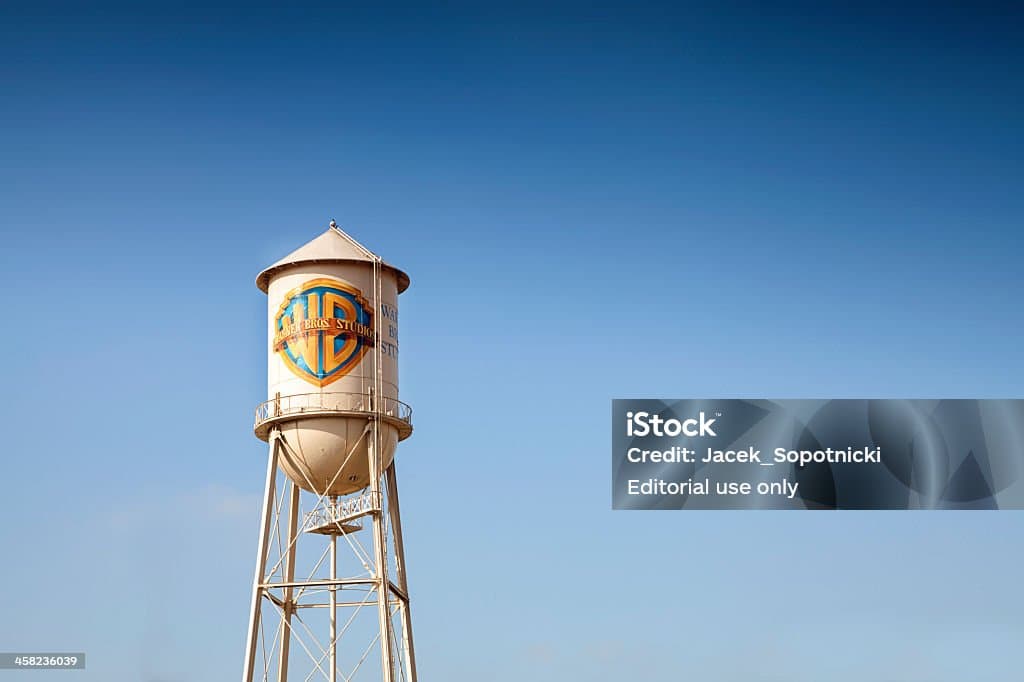
The movie, like many, was produced and distributed by one of the biggest, most traditional and well-known film studios since the early days of cinema: Warner Bros. More than any studio, Warner Bros. symbolizes the magic of Old Hollywood and, through its ownership of HBO and HBO Max, the gold standard of modern prestige television. Legends like Bette Davis and James Dean defined generations, while its century-old catalog reads like a cultural memory bank: Casablanca, The Shining, The Wizard of Oz, Harry Potter. Today, HBO series like Game of Thrones, Succession, and The Last of Us continue that legacy, shaping today’s cultural conversations. Now, this legacy may soon change hands.
On December 5th, Netflix and Warner Bros. Discovery announced a definitive agreement: Netflix intends to acquire Warner Bros. – including its film and television studios, HBO and HBO Max, one of its main competitors – for a whooping $82.7 billion after Warner’s cable networks like CNN and TNT are spun off into a separate company. At first glance, the idea of merging Old Hollywood with the world’s most powerful streaming platform might sound like a high-stakes love story. But as we’ve learned from countless Hollywood scripts: love isn’t always what it seems and this is certainly not a wedding of equals – it’s a takeover.
If Netflix isn't outcompeted by media giant Paramount Pictures and if the deal is approved by antitrust authorities, Netflix would gain control of one of the most valuable cultural archives in entertainment, including the rights to the Harry Potter and Batman franchise. The announcement not only ‘sent shock waves through Hollywood,’ as The New York Times put it, but was heavily criticized by the entertainment industry, film lovers, and advocates of quality television and cinema.
And, while there are many ways to examine this deal, as done by countless outlets before, this article aims to do two things: First unpack what’s happening around the acquisition, and then look at it through a lens that’s often overlooked in public discourse: the logic of corporate ownership.
Act I: Let’s start with what all the fuss is about.
Mergers and acquisitions in media (or any other industry) aren’t new. But few deals carry this much (symbolic) weight, money, market impact, emotional charge and structural consequence. So, what exactly is going on here? And why is everybody so concerned?
A tech company in the entertainment business.
Well, let’s start with the nature of the acquirer. Netflix isn’t just any company. It’s arguably a tech platform first, a streaming service second, and an entertainment company ... maybe third? With around 300 million subscribers, Netflix is already the world’s largest paid streaming service. But Netflix didn’t just bring great movies and shows into homes around the globe, it also changed how we watch and how stories are told. Long gone are the days of impatiently waiting a week for the next episode. Netflix popularized binge-watching and shaped algorithms-based storytelling: storylines are becoming tighter, pacing faster, and episodes are engineered to keep us watching, often for hours at a time. That's no surprise, is it? After all, Netflix is a tech company whose decisions about what gets made are driven by data: what people click, how long they watch, when they pause or stop.
The issue of market power.
Now, with the planned acquisition of Warner Bros., Netflix would acquire the streaming platforms HBO and HBO Max, one of its main competitors. Add HBO Max’s nearly 130 million subscribers to Netflix’s 300 million, and you get a company that controls at least 30% of the U.S. subscription streaming marketplace. And make no mistake: a market share this large doesn’t just mean more reach, it means more power. When a single company becomes as dominant as Netflix would be, competition inevitably suffers, and so do we as consumers (more on that later). Unsurprisingly, the deal has caught the eye of antitrust authorities, especially in the United States, and it remains highly questionable whether the deal gets approved after all.
Secondly, Netflix wouldn’t just expand its digital presence, it would significantly grow its overall power in the media industry. Unlike traditional studios, Netflix is largely independent of cinema chains, networks, or third-party distributors, which leaves it already in a powerful market position. Now, with Warner Bros., Netflix would also acquire a fully-fledged film studio with one of the most influential theatrical production arms in the world. With this acquisition, the company would gain even greater leverage over the entertainment industry. And it would place the company – that has long been skeptical of the theatrical business – among the “Big Five” and with it in a new role: producing content for other outlets after years of focusing solely on its own platform and at-home viewing. That’s why, in Hollywood, many warn of a potential “death of cinema”, arguing that Netflix has 'no incentive to support the theatrical exhibition, and every incentive to kill it.' While Netflix has stated that it intends to 'maintain Warner Bros. current operations and build on its strengths, including theatrical releases for films ', not everyone is convinced. And indeed, promises like these are nothing new in major acquisition deals, but whether they hold is another question entirely.
The political dimension of it all.
The power Netflix stands to gain through the acquisition of Warner Bros. hasn’t gone unnoticed and has drawn a “surprising” figure onto the stage. Drumroll, please: U.S. President Donald Trump. Trump publicly questioned the deal, calling it a potential 'problem' for regulators and that he’d be 'personally involved '. A surprising remark, given that U.S. antitrust authorities are traditionally expected to operate independently of the White House.
Now, what began as speculation became reality on the night of December 8th (CET), when reports confirmed that Paramount Pictures had officially entered the bidding race, submitting its own bid for Warner Bros. While presenting itself as the 'savior of Hollywood', Paramount, too, is not entirely neutral. Recently acquired by Skydance Media, it’s led by CEO David Ellison, whose close ties to Donald Trump are well documented. This raises further questions about Trump’s motivation. After all, Warner Bros. also owns cable assets like CNN, a network that has been openly critical of Trump throughout his presidency and that he routinely dismissed as “fake media.” So one has to wonder: Is Trump’s sudden involvement really about protecting competition?
Actress and activist Jane Fonda put it starkly, calling the deal ‘an alarming escalation in a consolidation crisis that threatens the entire entertainment industry, the public it serves, and – potentially – the First Amendment itself.’
Whichever company ends up making the cut – if any of them, since also Paramount is facing scrutiny from antitrust authorities – one thing is clear: in a climate where independent media is getting scarcer, where political actors are increasingly seeking influence over media, and where that influence can easily be bought with money, we need to look much more closely at the paradigms and legal structures behind deals like these – and start challenging them.
Act II: The logic of corporate ownership.
While everyone’s busy discussing who’s buying whom and who owns what, we want to shift the spotlight to the underlying structure of it all: corporate ownership. Because the way companies are owned doesn’t just shape business deals, it shapes our economy, our culture, and the kind of society we live in.
Corporate ownership defines who legally owns a company and what ownership rights this gives them. Conventionally, these rights (voting rights/ power over the company and economic rights/ money) are often bundled up together. The owners (shareholders) both hold control of the company (they legally have the final say over the company) and are able to monetize the company and receive its profits. Power and economic rights can be inherited, bought and sold. Legally speaking, this turns the company into a commodity: a tool for generating financial wealth for its owners; an asset that can be sold off to the highest bidder – which in turn influences how and with what motive major decisions are made.
Now, this may be the dominating societal understanding of corporate ownership, but it’s not the only one (we will come to that later)!
It is also the type of ownership structure that both Warner Bros. and Netflix are structured as. Let’s take a closer look.
Last updated: 17 December 2025
Show more resources