

A Living Web of Many Stakeholders
Steward ownership isn't just a concept but a lived reality. To learn through practice, we offer an overview of key actors and their contributions in the field. Diverse entrepreneurs, investors, legal experts, policymakers, and field-builders are working toward the same goal: businesses that stay independent, purpose-driven, and use the positive power of entrepreneurship to create value and prosperity for people, planet & society.

Not an idea of one. An idea of many.
What makes steward ownership powerful is precisely that: it cannot be owned by any single actor. It takes root through a diverse ecosystem of companies that dare to go first, investors who back them, lawyers who find the path, policymakers who make it easier, and field builders who carry the torch to new regions. Together, these groups create the conditions for a fundamentally different kind of economy.
With this website, we, the Purpose Foundation, are attempting to make this ecosystem visible. Because we want to give you the possibility to learn through different angles: understand their unique perspectives and how they are making steward ownership tangible. And because we do believe that the whole is greater than the sum of its parts.

Six groups with one shared direction
To understand and shape steward ownership, diverse perspectives are needed. Here's a snapshot of some of the core actors in the ecosystem and what they bring to the table. Of course, some sit at intersections of these groups or extend beyond them. This overview is intended to make the different angles for looking at steward ownership clearer to you.
Companies & Entrepreneurs
These are the forerunners and practitioners who choose steward ownership for their companies. Whether at founding, succession, or transformation. They prove the model works and enable us to create practical case studies for learning.
Examples include:
- Startups building steward ownership into their DNA from day one
- SME owners & founders planning a value-aligned succession
- Established companies transforming their ownership structure
Aligned Investors
These help us to learn how capital can seek meaning alongside returns. Investors in the steward ownership ecosystem accept capped returns in exchange for knowing their money supports long-term, mission-driven companies, not short-term extraction.
Examples include:
- Funds and impact funds that include steward ownership in their portfolio
- Business angels wanting to support independent, purpose-driven startups
- Mission-aligned banks and family offices exploring the model
- Philanthropic actors and foundations funding the field directly
Field Builders
To make knowledge on steward ownership accessible, it needs to be brought to life in local contexts – navigating language, law, culture and policy. Diverse nonprofits and innovators are spreading the ideas and developing new knowledge on steward ownership regionally.
Examples include:
- Field builders operating in specific countries or regions
- Research institutes and university programs building the evidence base
- Advocacy groups championing legal reform locally
Academics & Researchers
Steward ownership gains credibility, clarity, and reach through rigorous research. Academics and researchers build the evidence base for our learning materials and for the field to mature.
Examples include:
- Economists and business scholars studying ownership models and their outcomes
- Law faculties developing jurisdiction-specific legal frameworks and templates
- MBA and management programs embedding steward ownership in the curriculum of tomorrow's leaders
Policymakers & Legislators
Currently, the legal implementation of steward ownership is often complex and costly. Policy work can contribute to making implementation knowledge of steward ownership more accessible and creating a supportive regulatory landscape.
Examples include:
- Lawmakers drafting or reforming ownership legislation
- Regulators shaping investment frameworks for patient capital
- Government programs supporting ownership transitions
- International bodies recognising steward ownership models
Service Providers
Steward ownership implementation also needs the perspectives of legal advisors, tax consultants, accountants and strategic consultants. Through experienced service providers, the knowledge becomes easier to access and implement properly in company structures.
Examples include:
- Lawyers and notaries structuring ownership transitions
- Tax advisors navigating jurisdiction-specific implications
- Strategy consultants supporting cultural and organisational change
- Accountants and financial planners for mission-aligned capital

The foundations of shared knowledge
What connects the ecosystem
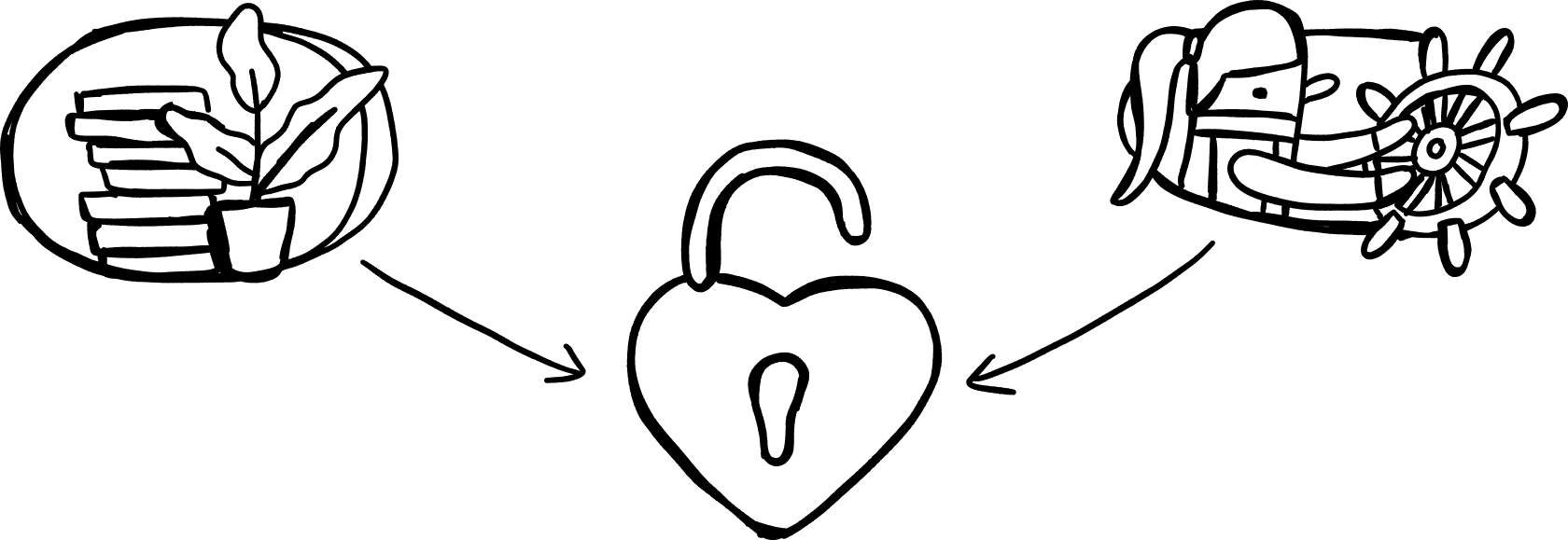
01 Shared Principles

02 Honest exchange
Knowledge, tools, legal templates, and lived experience flow across the ecosystem – they become better through the diverse perspectives.

03 Long-term thinking
Every actor in this ecosystem operates on a longer time horizon than conventional markets require. They are willing to ask different questions and search for answers.
What’s currently happening in the ecosystem?
If you are now curious about how this looks like in practice and what you can learn from these actors, we have something special for you: Our 2025 Developmental Evaluation asks stakeholders across the ecosystem which significant changes they have observed. To learn and to better understand the development of the idea.

Beyond steward ownership: allies and fellow travellers
Steward ownership doesn't exist in a vacuum. Rather, the opposite, it is part of a broader conversation about how we want economies to work – and many organisations, movements, and thinkers are asking the same fundamental questions from different angles. Therefore, we want you to also learn more about which movements and ideas steward ownership shares common ground with.
We find natural allies in the cooperative and employee-ownership world, in impact investing and regenerative business communities, in B Corp networks, and in family businesses whose owners are building something that outlasts any individual and resist the pressure to simply sell. Indigenous economic traditions inspire us: they have always understood land, resources, and community wealth as something held across generations, not extracted from them. We share ground with faith traditions that have long held enterprise to be a form of trusteeship rather than personal entitlement, like Christian stewardship theology. We also collaborate with researchers, social entrepreneurs, and legislators working toward more accountable forms of ownership and governance across the political spectrum.
These aren't the same thing as steward ownership – and that distinction matters. But the underlying conviction is shared: that businesses can be structured to serve people and planet over the long term, without sacrificing independence, quality, or ambition.
We learn from these allies. We refer people to them when another model is the better fit. And we believe that a plurality of ownership alternatives is what a genuinely different economy looks like.
If your organisation works in an adjacent space and you'd like to connect, we'd love to hear from you.

Have questions? Join our open call.
Almost every week, we, the Purpose Foundation, hosts a free, open session on steward ownership. We introduce the basics, walk through real-world examples, and answer questions from participants. There's no registration fee and no prerequisites and everyone is welcome. It's an easy way to learn about the topic, hear the questions others are asking, and see how steward ownership works in practice.
Join the next open call