

News
Resources
This audio is generated with AI. As much as we'd love to read this content to you ourselves, as a small team we do not have the resources for this. After careful consideration, we decided that we will use AI because it enables people to access our content in more diverse ways. It will not be perfect but we hope it's useful for those who prefer audio content over reading. For more information on how we use AI, click here
Oct 29, 2026 · 15 min read
by Christoph Bietz, Purpose Foundation
(as published on ImpactAlpha, will soon be updated to more elaborate version here)
You’ll have to give him that: probably no one in the history of business has ever warned the public about their own product quite so enthusiastically as Dario Amodei. Anthropic’s CEO is concerned that “bad things will happen”, that AI will replace jobs on a massive scale, that it could be a boon for autocracies, potentially with “a huge army of drones that could go after each individual person. It’s really scary. It’s really scary and we have to stop it” (Wall Street Journal, January 2026).
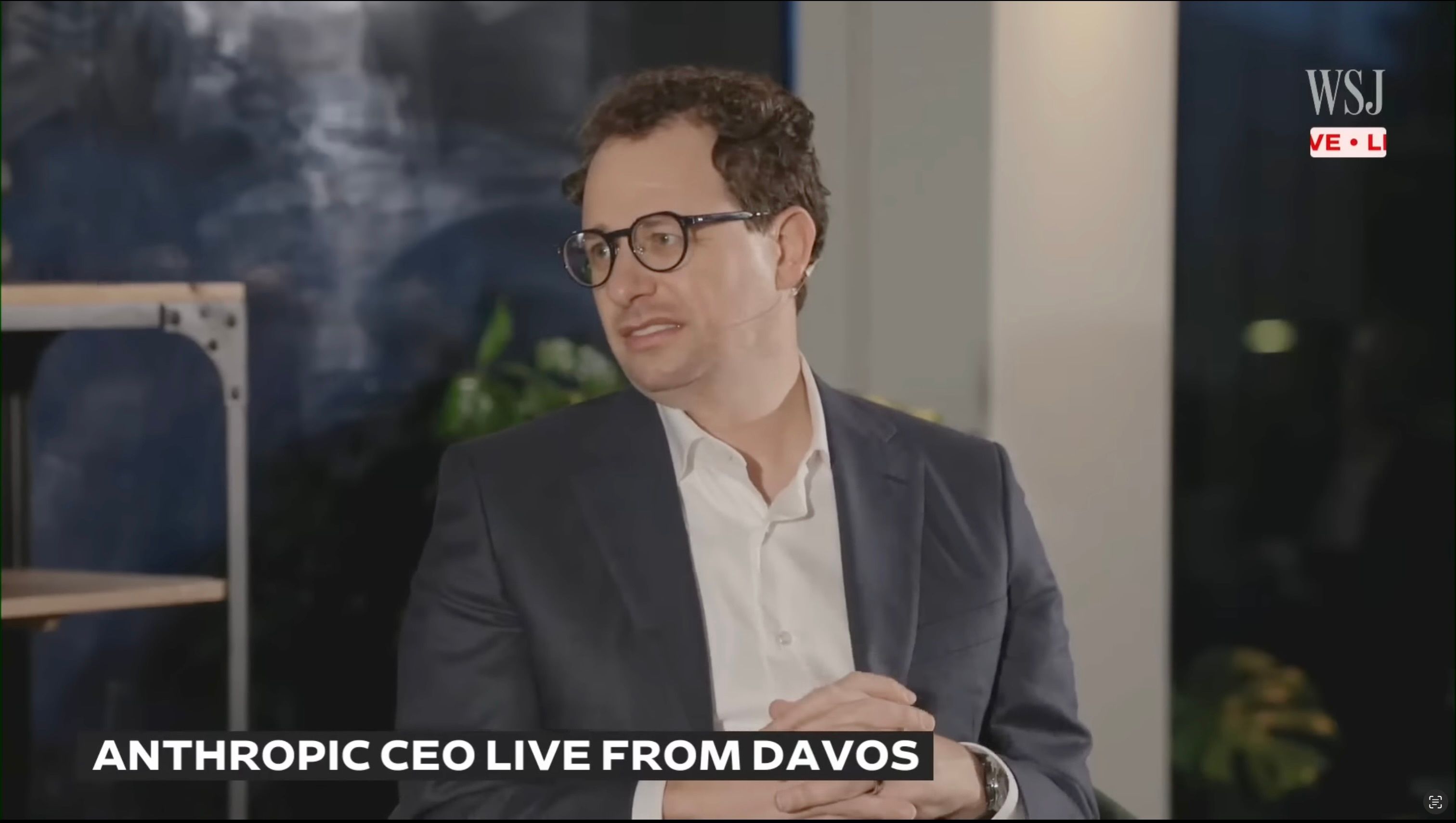
Dario Amodei, interview with the Wall Street Journal in Davos, 20.01.2026
But for now, the race to create the most powerful AI continues. And Anthropic is in the lead. This week, it has filed its S-1 prospectus. The cognitive dissonance in the industry is striking: Both Anthropic and its biggest rival, OpenAI, are built around the mission to develop AI for the benefit of humanity. And while the protagonists both warn of the dangers of the very technology they are building, arguing that AI development must slow down, they strive for larger-than-life IPOs, aiming to scale up even faster.
But let’s be fair: they were aware of the challenges from the outset, and they addressed them using specific governance mechanisms – which, in itself, is highly commendable and not to be taken for granted. OpenAI was founded as a non-profit which later became the OpenAI Foundation. Anthropic implemented a so-called Long-Term Benefit Trust in 2023. So alignment has not only become the major goal for AI development itself – it’s obviously also meant to be applied to the governance structures that determine how these corporations are run.
Then it gets more complicated: Developing AI is extraordinarily expensive (data centers, chips, electricity), and the industry is still in the red. Anthropic posted a net loss of $80 billion on revenue of $16 billion in the first half of 2026. Over the next ten years, the company has committed to purchasing computing capacity worth $518 billion – even if it does not need it. The financial pressure is enormous. After several funding rounds, the logical next step is an IPO.
But what structures does the IPO meet? Are these structures really aligned to Anthropic’s stated mission? Are they filled with legal substance, not just business keywords? And what do they have to set against the logic of the stock market?
In February, something happened that, at least a good half-year later, sounded like a bad joke: Anthropic relaxed its safety guidelines, dropping its commitment to pause further AI development if safety measures could not keep pace. The board made the decision unanimously. The rationale: a highly competitive market would not allow for a unilateral pause.
Amodei made his suggestion to “pace the frontier” the very weekend Anthropic selected Nasdaq for its IPO. But pacing the frontier did not mean pacing the business: since SpaceX's listing, companies can be included in major indices like the Nasdaq-100 after just 15 days, forcing index-tracking funds – pension funds among them – to buy the stock. If the big AI bet fails, ordinary people pay the price.
Anthropic’s prospectus now includes more than 90 pages of risk factors for future shareholders. While co-founder Jack Clark finds AI to be like a "Formula 1 race at night, without maybe brakes”, many employees leave the company for this very reason. “This is nuts what’s happening”, David Robertson, a former safety leader at Anthropic, said on the Ezra Klein Show: “The AI industry has an unsafe culture.”
If one wishes to trace the origins of undesirable developments, the search for individual responsibility alone cannot sufficiently answer that question. This is not about good guys or bad guys. We rather have to look at ownership and governance. These are the structures that shape corporate behaviour and condition the prevailing logics according to which decisions are ultimately made.
Anthropic was founded in 2021 as a Public Benefit Corporation, or PBC, under Delaware law, legally obligated to balance shareholder interests with its public-interest mission. Whether it adheres to that mission, however, is pretty subjective: under US corporate law, no government agency monitors this, and only shareholders can sue a PBC. The public benefit has no one to speak for it.
“The only reason to choose benefit form over any other corporate form is the declaration to the public. It doesn't actually have any real enforcement power behind it,” as Ann Lipton, a corporate law professor, has put it.
So in order to strengthen the mission, also against potential shareholder interests, the company established a trust structure: the Long-Term Benefit Trust, or LTBT, meant to ensure the PBC balances mission and shareholder profit (see Trust Agreement, 1.3).
Although the trust was set up with five trustees, there are currently only four. The initial trustees were appointed by the company. Each serves a one-year term, which can then be renewed. Succession works through co-optation, a classic principle: the sitting trustees choose their own successors.
The LTBT receives its powers through a special class of shares – Class T shares, recently consolidated into one – which allows the trust to elect four of the company's seven directors. A separate contract, the Stockholders' Agreement, also gives trustees information and advisory rights on AI safety and risk, and requires notice before major decisions such as a sale, merger or transfer of control.
Crucially, these rights are granted neither by the certificate of incorporation nor by the T share itself, but are merely contractual – and such contracts can be amended at any time. The trustees can also remove the directors they appoint, giving them a hand on the steering wheel – without any economic incentive, since the Class T share carries no profit rights whatsoever.
With the IPO, the share structure changes: existing preferred stock converts into Class A, which carries voting rights, and Class N, held mainly by outside investors and carrying no voting rights. Only Class A will be publicly traded (see figure 1). The T stock is not affected by this, but it’ll become relevant later (see chapter 3).
Another major change is the creation of a new LLC that secures the seven founders a majority of voting rights after the IPO. Through a Class F share held jointly by the founders, 50.1% of the voting power on key decisions stays with them, as long as a majority of the seven agree. The LLC has no operational business, no assets of value, and may not take on debt. And Anthropic's prospectus clearly limits its powers: The LLC dissolves once fewer than three of the seven founders are still with the company. Also, founders can at any point decide to redeem their F share.
A further new entity, the Anthropic Public Benefit Fund, is a subsidiary of the PBC to which the company will commit 5% of its shares to address the “labor market impacts” of AI. A dissonance can hardly be denied: Anthropic plans to address the very problems its own business model creates – and so far this remains a declaration of intent, subject to stockholder approval, with Anthropic itself deciding where the money goes.
The LLC structure means the fund has no mandatory annual payout, unlike private foundations. And the funds can be allocated at Anthropic’s discretion.
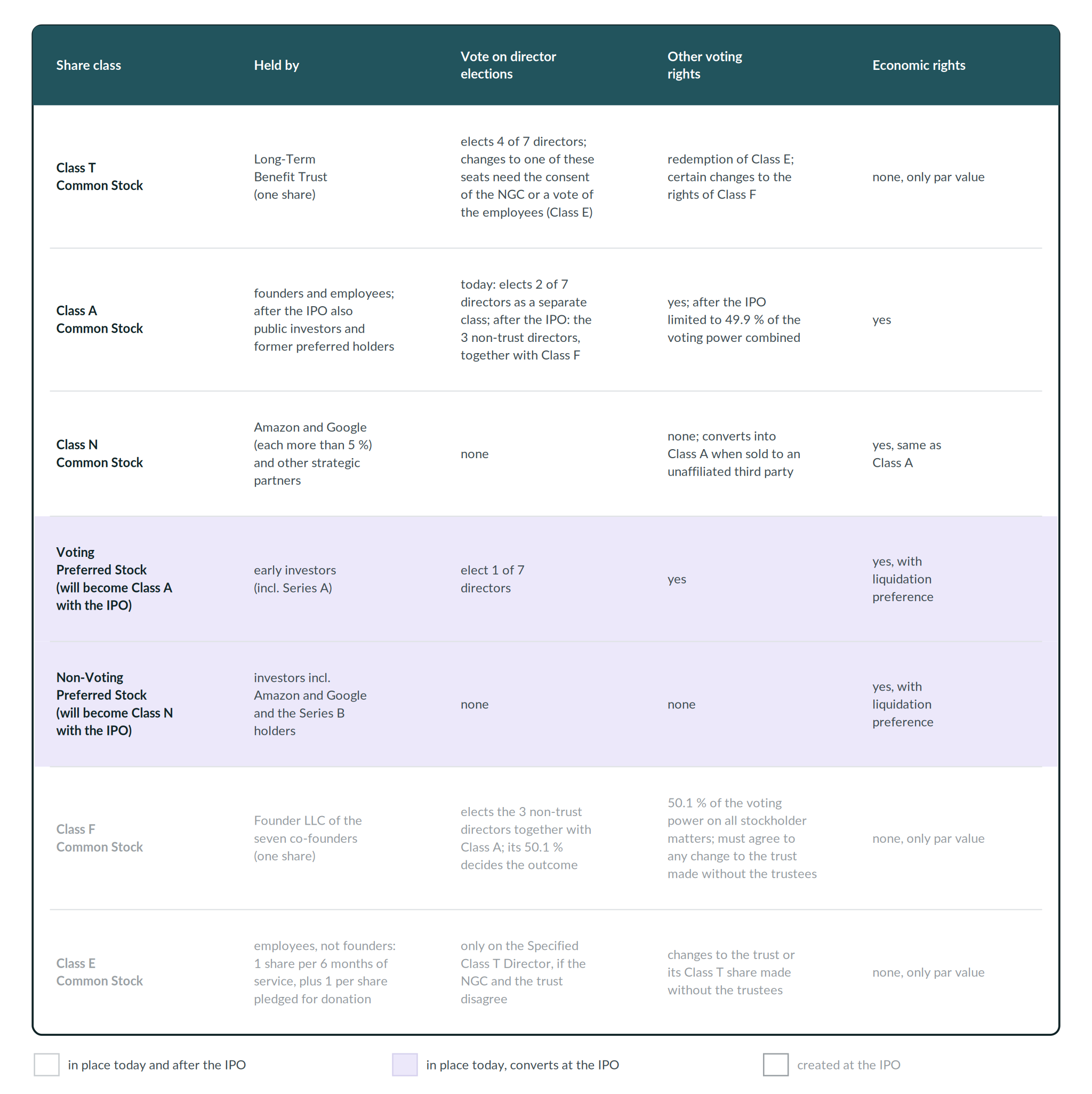
Figure 1: An overview of Anthropic’s Share Classes, © Purpose Foundation, 2026
An independent trust that always has to put the mission first formally elects the majority of the company's highest governing body. Huge chunks of the investor capital, for instance from Google and Amazon, have no voting rights. And major decision-making lies with Class F shares held by the founders. It looks like steward ownership elements? But in the end, the answer comes out negative.
Steward ownership (SO) is a corporate structure that makes sure a company stays mission-focused and independent in the long term – on a legally binding basis. Independence and purpose-orientation, its two guiding principles, are irrevocably implemented into a company's ownership, in its very DNA.
Technically, profits and overall value are bound to the company itself, while control (meaning at least the majority of voting rights) lies with stewards who cannot indefinitely benefit financially in the company’s economic success (but are fairly compensated in line with market rates). This ensures that a company’s mission, purpose, and values cannot be undermined by mere shareholder value interests (more on SO principles here).
An IPO does not, in and of itself, contradict this – as Danish foundation-owned companies like Carlsberg and Novo Nordisk demonstrate.
So let's test Anthropic's LTBT against these principles. Tellingly, Anthropic itself called the structure “a corporate governance experiment” when it announced the LTBT in 2023. While power is clearly separated from money within the trust, the trustees can only fill some seats on the board. They cannot, contrary to what is often claimed in public, independently elect a majority: nominating or removing the director for the fourth of seven seats requires the consent of the board's own nominating committee, or, if it refuses, a vote of the employees.
Additionally, the trust is also less independent than it looks. The so-called Nominating Committee (NGC) of the PBC-board has to be notified when new appointments take place. According to the prospectus, company executives and trustees collaborate “closely” on “selecting trustees”. So the company obviously has a say in the composition of precisely the body which is supposed to control it.
The most decisive point, however: the trust's control is not permanent or binding in the long term. Anthropic itself has made clear since 2023 that “failsafe” provisions allow changes to the trust and its powers without the trustees' consent, if sufficiently large supermajorities of stockholders agree. The prospectus now confirms it: it is possible to amend the trust's terms, transfer the T share, strip it of its powers, or redeem it for no consideration – without the trust's own consent. Should founders and shareholders actually do so, a so-called “Class T Sunset Time” sets in, leading to all seven board seats being elected by Class A and Class F voting together – which, given the founders' 50.1 percent, means: by the founders, for as long as the Class F share exists. Once it’s gone, simply by the shareholders of the Anthropic PBC.
And as soon as the process has been set in motion, that sun will never rise again: “The Class T Sunset Time, once triggered, is not subject to extension, delay or waiver” (prospectus, p. 252).
As Zach Stein-Perlman, founder of AI Lab Watch, put forward as early as 2024: “Public information is consistent with the Trust being quite subordinate to stockholders, likely to lose their powers if they do anything stockholders dislike.”
The Class F share of the Founders LLC carries the majority of voting rights, no economic rights, and membership can be neither sold nor inherited. This sounds a lot like stewardship, but it, too, only holds for a limited time, lasting only as long as at least three founders remain members. And the founders are by no means steward-owners without financial access: each holds an estimated 1 to 2% stake in the company via Class A Shares – roughly $20 billion each at the valuation currently under discussion.
And, in stark contrast to steward ownership, the founders’ right to exercise 50.1 per cent of the voting rights via Founders LLC and F stock is even explicitly linked to an economic stake. So the Founders LLC is not a true stewarding entity at all. Unlike in steward-owned companies, Anthropic's founders are not structurally shielded from the suspicion of acting out of personal shareholder interest rather than in the spirit of the mission. Control and economic rights go hand in hand.
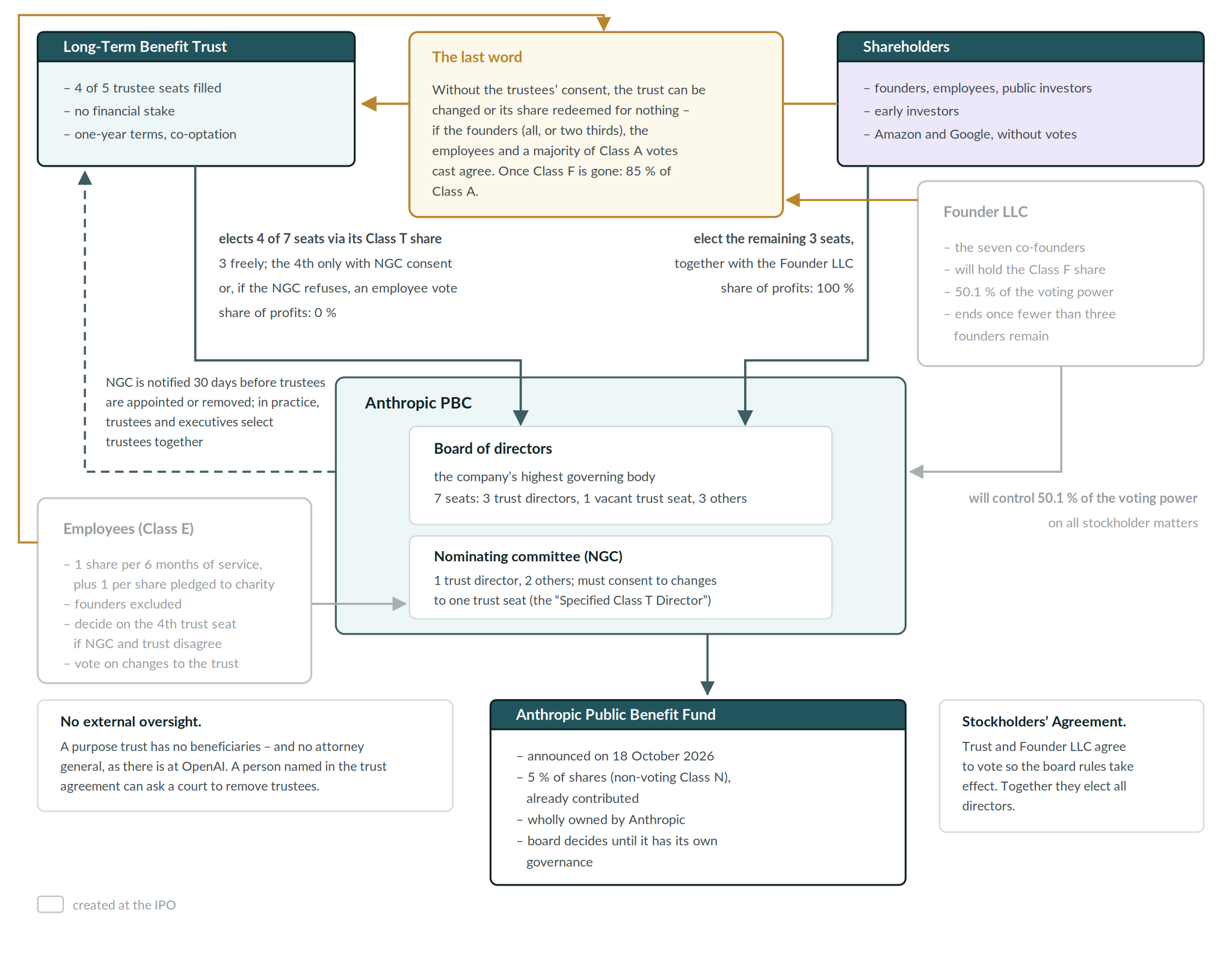
Figure 2: Anthropic’s Ownership Structure, © Purpose Foundation, 2026
Let’s sum this up and break it down to the two SO principles:
Independence seems in place to a certain degree: founders who are actively involved in the company’s operations hold the majority of voting rights (50.1%), but not forever. And a trust with independent trustees has a hand on the steering wheel of the company. But it’s only one hand, and this hand can be removed if the other hand is strong enough to push it aside. So in the end, ultimate power lies with the shareholders. Independence is thus not guaranteed in the long run, as would be the case in a steward ownership structure.
Purpose-orientation, realised through a kind of capital lock (meaning that profits and overall value of the company are bound to company and its long term development), is not in place at all: there is no thorough, legally binding separation between control and personal access to the company's value. Although there is a large chunk of non-voting stock, held for instance by Amazon and Google, these shares automatically convert to Class A stock (which is equipped with voting rights) once they are sold.
Governance structures designed to safeguard the company’s mission-oriented focus and independence – whether through a trust or control by the founders – are potentially temporary and lack long-term, and in some cases any, legal binding. The two share classes designed for this purpose – Class T and Class F – are explicitly referred to in the prospectus as having a “sunset time.” The aim is to remain as flexible as possible on the stock market: “to preserve long-term flexibility should circumstances change” (p. 108).
The prospectus thus projects a future vision of Anthropic as a kind of ‘perfectly ordinary’ listed PBC, devoid of any control or safeguard mechanisms whatsoever to ensure its independence and fulfilment of its mission.
We do not want to claim that tech corporations like Anthropic would best be organised along SO lines. Nevertheless, Novo Nordisk, the world's largest foundation-owned company, shows a way it can work: through dual-class shares. The Novo Nordisk Foundation holds all the A shares – carrying 10 times the voting rights of B shares, and which may never be sold – securing a permanent 77% majority, while B shares are freely tradable. This refutes the prejudice that SO and capital markets are incompatible: shares can be traded, as long as control itself is not.
Anthropic's LTBT is not a toothless tiger, but it seems that, in case of doubt, it does not necessarily bite either. It simply lacks the legal binds that steward ownership provides. SO and its principles usually cannot be revoked, as they are anchored in a company's DNA: its ownership. That is precisely what Anthropic's mechanisms are not.
Anthropic’s LTBT is rather an organ grafted on from outside, one that can also be cut off again from the bloodstream of power – as shown by the consensual change to the safety policy in February, which ran counter to the company's own stated mission.
Anthropic’s upcoming IPO, unlike Novo Nordisk’s listing, meets structures that do not fully safeguard mission alignment – and that allow distortion. Shareholders see the trust as a risk of value impairment, and the control mechanism, not 100% secure in any case, could also be abolished by a shareholder majority.
The more relevant pressure, however, does not run through votes at all. Publicly listed companies change behaviour on account of expectations, quarterly figures and share price reactions, long before anyone files a motion to amend a certificate or a trust’s rights. The market pressure is maybe bigger than ever, as huge AI valuations have to be defended. Paul Polman, former CEO of Unilever, explains the dynamics in an upcoming interview: “The economy used to be the dominant force and the financial market served the economy. Now, most of the time, it feels it’s the other way around.”
In the words of “Incorruptible” author Eric Ries, this force can also be called “financial gravity” – so strong that it is difficult for companies to resist unless they have put effective safeguards in place. A legally binding ownership structure may not be immune to it, but it does at least bring a certain resilience with it.
Anthropic’s founders are very aware of the potential risks of their product and business model. And they are indeed addressing the issue with special governance structures – which is a good news. There are reasons to believe they are doing the best they can. The LTBT is far more than nothing, and huge amounts of shares are going to be dedicated to public benefit, with the founders promising to donate 80% of their own shares.
The key takeaway of this piece is: for now, the honest description is not that Anthropic is going to abandon its mission. But the governance structures clearly allow for this scenario to happen. And with neither T nor F stock designed for the long run, Anthropic’s long term ownership vision is to one day become just another ‘normal’ stock-listed company.