


News
Resources
This audio is generated with AI. As much as we'd love to read this content to you ourselves, as a small team we do not have the resources for this. After careful consideration, we decided that we will use AI because it enables people to access our content in more diverse ways. It will not be perfect but we hope it's useful for those who prefer audio content over reading. For more information on how we use AI, click here
Oct 29, 2026 · 41 min read
by Christoph Bietz, Purpose Foundation
(elaborate version of a previously on ImpactAlpha published article; scroll to bottom of this page to read the short version)
You’ll have to give him that: probably no one in the history of business has ever warned the public about their own product quite so enthusiastically as Dario Amodei. Anthropic’s CEO is concerned that “bad things will happen”, that AI will replace jobs on a massive scale, that it could be a boon for autocracies, potentially with “a huge army of drones that could go after each individual person. It’s really scary. It’s really scary and we have to stop it” (Wall Street Journal, January 2026).
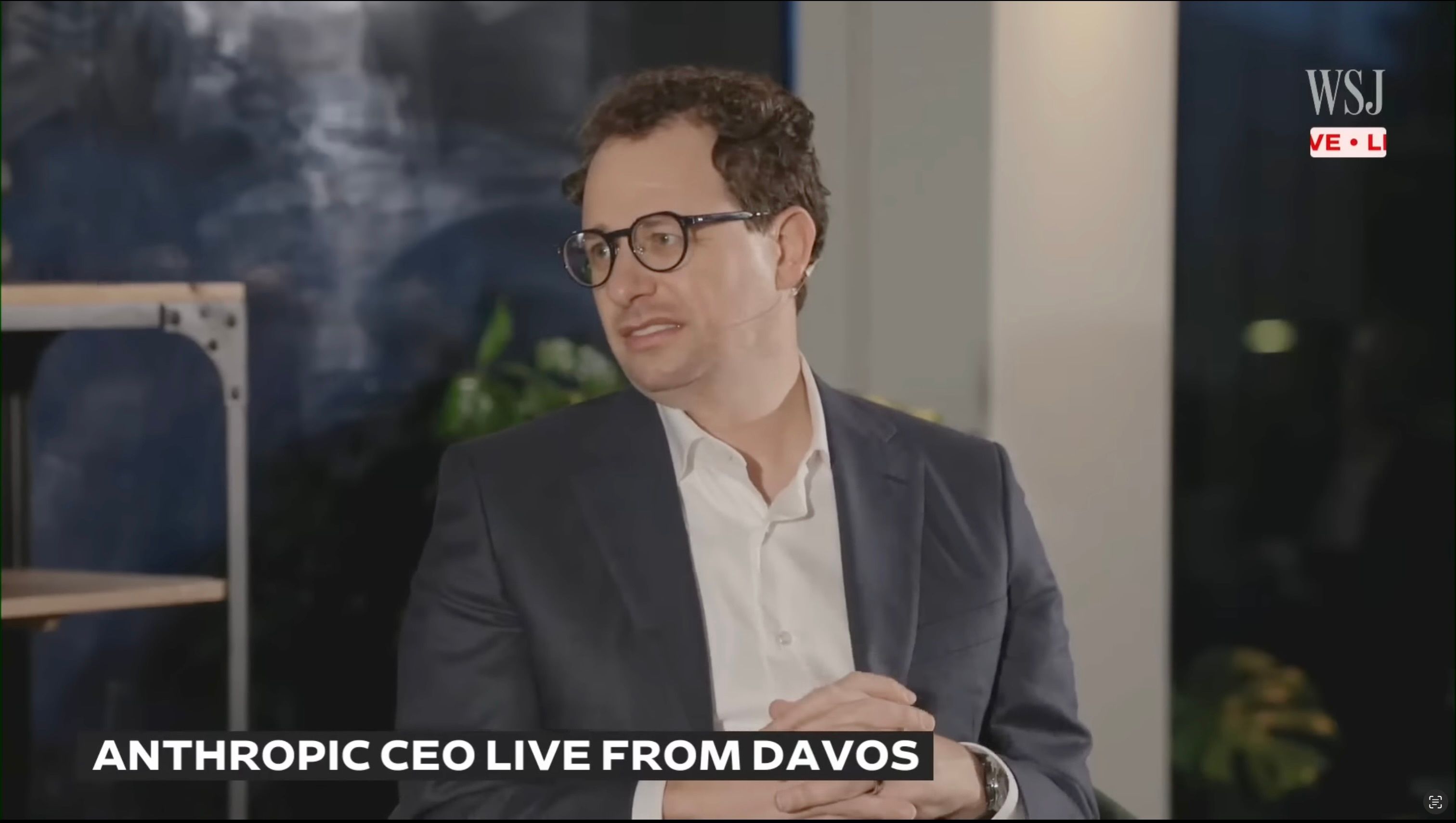
Dario Amodei, interview with the Wall Street Journal in Davos, 20.01.2026
But for now, the race to create the most powerful AI continues. And Anthropic is in the lead. This week, it has filed its S-1 prospectus. The cognitive dissonance in the industry is striking: Both Anthropic and its biggest rival, OpenAI, are built around the mission to develop AI for the benefit of humanity. And while the protagonists both warn of the dangers of the very technology they are building, arguing that AI development must slow down, they strive for larger-than-life IPOs, aiming to scale up even faster. Right in the middle of a period in which the question of AI safety is more pressing than ever.
– Dario Amodei, interview with the Wall Street Journal in Davos, 20.01.2026
Actually, the case is pretty simple: Everyone agrees that AI should be developed for the benefit of humanity and not work against it. And the frontier labs promise to do all they can to make sure their models are aligned with that goal. Alignment has become the major keyword since AI capabilities have improved dramatically and the infamous recursive self-improvement (= RSI = AI training itself) is around the corner. The Hugging Face case was just one example.
That is the point at which it gets more complicated: Developing AI is extraordinarily expensive (data centers, chips, electricity), and the industry is still in the red. Anthropic posted a net loss of $80 billion on revenue of $16 billion in the first half of 2026. Over the next ten years, the company has committed to purchasing computing capacity worth $518 billion – even if it does not need it. After several funding rounds, the logical next step is an IPO.
Meanwhile, there are millions of unresolved questions (you’ve guessed it: we won’t be able to address them all). How inevitable is AI really? Will it end humanity or save it? Can the call for self-regulation be taken seriously? How do we address the mass appropriation of human knowledge? Job losses? Rising inequality through AI? Potential risks like cyber attacks, biological weapons? How capable can AI or AGI really become? Is it already conscious, something that Anthropic’s co-founder Christopher Olah discussed with the Pope, stating he couldn’t rule it out? What are its mathematical and physical constraints (keyword: entropic drift)? Is it maybe all a big scam? And is a massive bubble looming – and if yes, who is going to pay the price?(1) At least that final question will be addressed here later, as it also plays a role in assessing Anthropic’s alleged mission alignment.
But let’s be fair: The protagonists were aware of the challenges from the outset, and they addressed them using specific governance mechanisms – which, in itself, is highly commendable and not to be taken for granted. OpenAI was founded as a non-profit which later became the OpenAI Foundation. Anthropic implemented a so-called Long-Term Benefit Trust in 2023. Both companies also operate as public benefit corporations. These structures are obviously also intended to build trust and have already become public showpieces.
So alignment has not only become the major goal for AI development itself – it’s obviously also meant to be applied to the governance structures that determine how these corporations are run. Anthropic, shortly before filing its prospectus, also announced that it would introduce a Public Benefit Fund. And a Founders LLC that would make the founders “stewards of our mission”.
Many promises and a jungle of governance mechanisms. We want to shed some light: How binding is Anthropic’s mission actually? What structures does the IPO meet? Are these structures really aligned to Anthropic’s stated mission? Are they filled with legal substance, not just business keywords? And what do they have to set against the logic of the stock market?
(1) The renowned technology consultancy Gartner recently warned of write-down risks running into the trillions by 2030.
In February, something happened that, at least a good half-year later, sounded like a bad joke: Anthropic relaxed its safety guidelines – specifically, it dropped its commitment to pause further AI development if safety measures could not keep pace. Only one month after Amodei reckoned “we must stop it” at the WSJ interview. The board made the decision unanimously. The rationale: The reality of a highly competitive market would not allow for a unilateral pause. If one developer paused while others kept training without strong safeguards, the world would end up less safe as the weakest would then set the pace.
In September, however, it was Amodei again, also a member of the board in question, who suggested to “pace the frontier” as AI was becoming increasingly non-controllable. Admittedly, he made this suggestion primarily in light of the developments that took place over the summer, as the dawn of the era of the long-heralded “self-recursive improvement” was imminent.
Nevertheless, such contradictions appear to be inherent in the subject. Amodei made his suggestion on the very same weekend that Anthropic selected Nasdaq for their upcoming IPO. So Amodei’s thoughts about pacing the frontier did not involve pacing the business and socialisation of financial risks: Since SpaceX’s listing, new rules apply here: companies are now allowed to be included in major indices like the Nasdaq-100 after just 15 days (instead of months as before). That forces index-tracking funds, among them pension funds, to buy these stocks. If the big AI bet fails, retail investors – the ordinary people – will pay the price.
Anthropic’s prospectus includes more than 90 pages of risks factors for future shareholders, yet it aims at a record-breaking valuation. AI development was like a "Formula 1 race at night, without maybe brakes,” co-founder Jack Clark said at a IMF summit in Bangkok mid-October. AI leaders say they do not fully trust what they are building – and yet new models are constantly being developed at ever-shorter intervals, models we understand even less and we can trust even less. “I looked around internally and I thought to myself: this is nuts what’s happening”, David Robertson, a former safety leader at Anthropic, said in the The New York Times’ Ezra Klein Show in October shortly after he left the company due to safety concerns: “The AI industry has an unsafe culture.”
If one wishes to trace the origins of undesirable developments, the search for individual responsibility alone cannot sufficiently answer that question. This is not about good guys or bad guys. We rather have to look at ownership and governance. These are the structures that shape corporate behaviour and condition the prevailing logics according to which decisions are ultimately made.
Anthropic was founded in 2021 as a Public Benefit Corporation under Delaware law. This means that, by virtue of its legal form, such a company is obligated to maintain a balance between the interests of its shareholders and its public-interest mission.
– Certificate of Incorporation, Anthropic, May 2026
Whether the company adheres to its mission, however, is pretty subjective. Under U.S. corporate law, there is no government agency that monitors this. Neither citizens, nor the government, nor NGOs, nor any other institutions can sue a PBC if they suspect it of violating this rule. Only shareholders can sue. The public benefit has no one to speak for it. "The only reason to choose benefit form over any other corporate form is the declaration to the public. It doesn't actually have any real enforcement power behind it," explained Ann Lipton, a corporate law professor at University of Colorado Law School, to Reuters in 2024. (2)
But Anthropic doesn’t rely solely on PBC status either. All seven of its co-founders had previously held leadership positions at OpenAI, which they left in 2020 and 2021 over what they described as a “different vision” (Daniela Amodei) for how AI research should be done – and they set out to build a company that would handle safety differently.
(2) An absurd example of just how arbitrary the status of a PBC can be is xAI: The company quietly abandoned its PBC status in 2024 – so quietly that Musk's lawyer later still described xAI as a PBC in a court filing in a lawsuit against OpenAI (cf. here, Musk lost the case in May 2026 because the jury found he had missed the statute of limitations).
To make this a reality, a Purpose Trust was established alongside the PBC: the Long-Term Benefit Trust, the LTBT. Its clear and rather straightforward purpose: to ensure that the PBC fulfills its self-imposed obligation to strike a balance between the company’s mission and shareholders’ profit interests.
– Anthropic’s announcement in September 2023
Although the trust was set up with five trustees, there are currently only four. (3) The initial trustees were appointed by the company. Each serves a one-year term, which can then be renewed. Succession works through co-optation, a classic principle: the sitting trustees choose their own successors.
The LTBT receives its powers through a special class of shares: Class T shares, and the approximately 1,000 of them were recently consolidated into one single share. This share allows the trust to elect directors to the board. In addition, a separate agreement with the company gives the trustees information and advisory rights, particularly on critical questions such as AI safety, AI risks and adherence to the mission. For major corporate decisions, the trust must be notified at least five days in advance. These include:
However, these rights are granted neither by the certificate of incorporation nor by the T share itself, but are merely contractual rights, set out in the so-called Stockholders’ Agreement.
Its main influence, after all, comes through the right to elect four of the seven directors of the company’s board.
And the trustees can also remove the directors they have appointed. This gives them, so to speak, a hand on the corporation’s steering wheel – without any economic incentive as the Class T share does not carry any profit rights whatsoever.
Since Jay Kreps’s resignation from the board in May, however, one of Anthropic’s seven board seats is currently vacant. So for the time being, there are only three trust-appointed directors and three directors appointed by shareholders.
(3) After Mariano-Florentino Cuéllar left in August to become Anthropic’s first Chief Global Affairs Officer, Christopher Stubbs, an experimental physicist at Harvard, was appointed on October 21. Before July 2026, it had been only three trustees – until Ben Bernanke, former Chairman of the Federal Reserve, was appointed (next to existing trustees Neil Buddy Shah (Clinton Health Access Initiative, founding member since 2023) and Richard Fontaine (Center for a New American Security, since June 2025).
The PBC’s certificate of incorporation including its most recent amendments from September, which is expected to remain valid until the IPO, recognises a set of different share classes:
How many shares of each were outstanding, is not public yet. What is clear is the rights attached to them when it comes to filling the company’s board: while the trust elects four seats, the holders of voting common stock – now founders and employees – elect another two, and a group of preferred shareholders, among them early investors, elects the last one.
With the IPO, this structure will change, however. Under an “automatic conversion” provision in the certificate, both classes of preferred stock – voting and non-voting – will cease to exist at the IPO, with the existing shares converted into Class A (which includes voting power) and Class N (without voting power). Here is an overview of all share classes – current and future ones (4). Publicly traded will be only Class A Shares, including voting and economic rights.
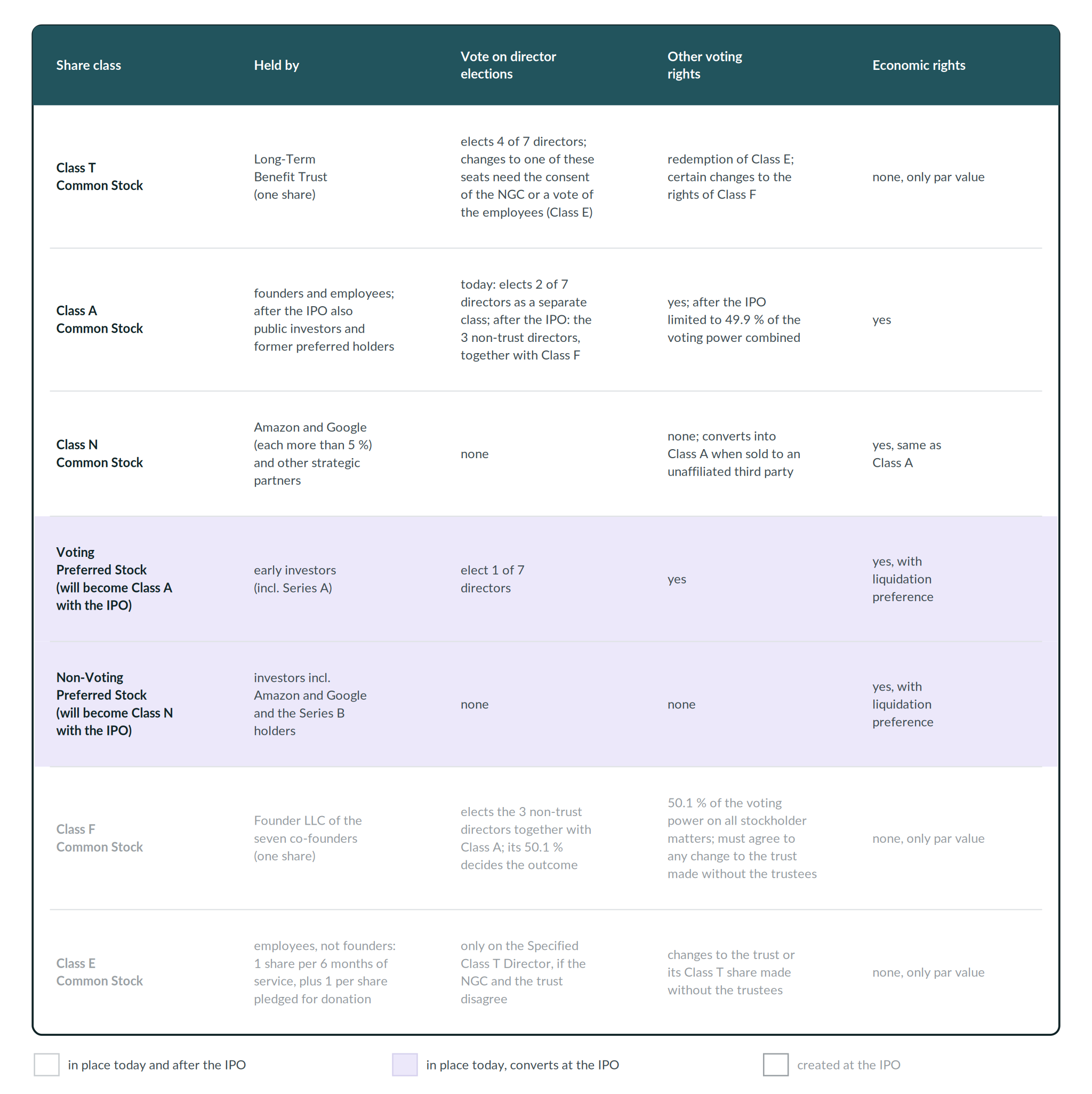
Figure 1: An overview of Anthropic’s Share Classes, © Purpose Foundation, 2026
(4) Sources: Anthropic’s certificate of incorporation as amended on 17 September 17, 2026; Class F is not part of the certificate of incorporation, it has only been reported; on Google and Amazon, TIME Magazine from May 30, 2024, and Motley Fool from September 15, 2026; on Google holding supposedly 14% see New York Times, March 11, 2025; that Google and Amazon hold no voting power is supported by the British competition authority, the CMA, which ruled in November 2024 that Google’s stake in Anthropic did not give rise to a relevant merger situation, explicitly citing the fact that its shares carry no voting rights. The CMA reached the same result on Amazon’s stake in September 2024 (see here).
A major change, now visible in the public prospectus, is the creation of a new LLC that secures the seven Anthropic founders a majority of the voting rights in the operating PBC after the IPO. Through a Class F share held by that LLC, which the founders own jointly, 50.1 percent of the voting power on key corporate decisions stays with them.
However, the founders’ 50.1 percent only comes into play if a majority of them – at least four of the seven – vote the same way. If they are split, for example three in favour, three against and one abstention, the Class F votes are cast in the same proportion as those of the Class A shareholders, who then effectively decide the matter on their own (5).
Beyond that, the LLC has no operational business, no assets of any value, and may not take on debt. The prospectus openly advertises the stewardship idea behind that:
– Anthropic’s prospectus, p. 12
It’s nothing out of the ordinary for founders in the tech industry to retain control. Elon Musk ensured during the SpaceX IPO that more than 80% of the voting rights remain in his hands. Mark Zuckerberg holds about 60% of the voting rights in the Meta Group, thanks to a dual-class stock structure. Anthropics' prospectus now clearly limits the founders' power: The LLC dissolves once fewer than three of the seven founders are still with the company. Also, the founders can decide at any point to redeem their F share for no consideration. In these scenarios, the Anthropic PBC would become a normal publicly traded corporation again – apart from the trust.
(5) See Founders LLC Agreement, 16(d)
Another new LLC, announced on 18 October, is the Anthropic Public Benefit Fund: a wholly owned subsidiary of the Anthropic PBC to which the company will commit 5% of its shares, with a further 2% possibility for every 50% increase in the company’s overall value.
As the founders have already publicly committed to donate 80% of their economic shares, this adds up to roughly 20% of Anthropic’s shares being dedicated to the public good (and even more, depending on the potentially recurring +2% possibility sketched above).
Anthropic stated that through the fund it wants to address “labor market impacts” such as “instability for many workers” brought about by AI. The fund could “explore large donations to traditional nonprofits or direct distributions to specific populations.”
Also here, a certain dissonance can hardly be denied. With the fund, Anthropic is planning to address the very problems its business model creates: the social and economic hardship that comes with job losses and unemployment.
– Dr Richard Denniss, economist and co-CEO of The Australia Institute,
before the Committee on Artificial Intelligence of the Australian Parliament, Oct. 2026
As many AI observers and economists – among them ‘AI Godfather” Jeffrey Hinton – have noted, replacing hundreds of millions of jobs is part of the business model and also the economic basis for the gigantic valuation crystallising with the IPO. Dario Amodei himself warns that unemployment could rise to 20% in the coming years – an assessment which had already suggested that a “White Collar Blood Bath” was on the cards (Axios, May 2026). And the record-breaking valuation will benefit insiders and early investors enormously, while Anthropic’s actual stated mission is to benefit humanity.
The fund can thus be read as an attempt to answer that dissonance. So far, however, all of this is nothing more than a declaration of intent, as a lot remains uncertain: the commitment is subject to stockholder approval (cf. CNBC, Oct 18, 2026). And since it is to be organised as an LLC rather than a charitable entity, Anthropic itself decides its governance, where the money goes and who it deems to be in need of support. If that is the most fair and sustainable way of redistribution – and whether redistribution and philanthropy are the best ways of solving inequality – is up to debate.
An independent trust that always has to put the mission first, albeit irregularly staffed, with trustees who have no financial incentives, formally elects the majority of the company’s highest governing body. Huge parts of the investor capital have no voting rights (like Amazon’s and Google’s shares; both first invested as early as 2023, and poured in large sums again in April 2026). And major decision-making will lie with Class F shares held by the founders. Thus: control is not for sale, and capital and power are separated to a certain extent.
Looks like steward ownership elements? Like a structure that places mission and purpose first while preserving long-term independence? We can hardly totally deny that.
Mark Ørberg of Copenhagen Business School and Ofer Eldar of UC Berkeley Law, who have both researched foundation-based enterprises (which are in many cases examples for steward ownership), have praised Anthropic’s trust structure as “mission-centered” – in the light of its refusal to make a deal with the US department of war in February (7). “The company exists to build safe AI, and its commercial decisions are filtered through that mission.”
You might have expected it: now comes the But. And to leave no room for misunderstanding: in the end, the steward ownership answer comes out negative.
(7) In February 2026, the Pentagon demanded that Anthropic lift the restrictions barring its models from being used for mass domestic surveillance and fully autonomous weapons. Anthropic refused. Defense Secretary Pete Hegseth designated the company a supply chain risk to national security, and President Trump ordered all federal agencies to stop using its technology; Anthropic took the matter to court. The Department then turned to OpenAI, which entered into an agreement with it. See also MIT Technology Review, March 2, 2026.
Steward ownership (SO) is a corporate structure that makes sure that a company stays purpose-focused and independent in the long term – on a legally binding basis.
(1) Independence and (2) purpose-orientation, the two guiding principles of SO, are irrevocably implemented into a company’s ownership; in its DNA, so to say. Technically, profits and overall value are bound to the company itself, while control (= at least the majority of voting rights) lies with stewards who cannot participate financially in the company’s economic success, but are, of course, fairly compensated (in line with market rates) (8). This makes sure that a company’s mission, purpose, and values cannot be undermined by mere shareholder value interests.
Steward ownership, so to speak, implements mission alignment within the ownership structure of a company – in its very DNA – and makes it legally binding.
In the US, the installment of a Perpetual Purpose Trust is a common way to implement these structures (9). Simply put: a PPT can be designed to legally enshrine stewardship ownership in the long term, but it doesn’t have to be. So let’s test Anthropic’s structure in terms of steward ownership principles.
First of all: an IPO and the trading of shares with voting and dividend rights do not, in and of themselves, contradict stewardship ownership. The large Danish foundation-owned companies, such as Carlsberg and Novo Nordisk, demonstrate this; most recently, the publicly traded meditech company Coloplast secured its long-term independence through a foundation structure that can be classified as stewardship ownership. More on that later.
For now, let’s take a closer look at the characteristics of Anthropic’s entity that is supposed to secure mission and long term independence: the LTBT.
(8) See “The Principles of Steward Ownership”
(9) See our case studies on Organically Grown Company and Firebrand Artisan Breads. One of the most famous steward ownership examples using a PPT is Patagonia, of course. And recently, the American boat manufacturer Grady-White Boats transitioned to SO using a PPT as well.
What the company itself has to say about its mission-safeguarding entity is kind of revealing: When Anthropic announced the LTBT in September 2023, it called the structure “a corporate governance experiment”. And from the very beginning, it made sure that the trust’s rights and powers would not take precedence over the company.
As a matter of fact, power is clearly separated from money within the trust at least (the trustees themselves do not have any financial stake in Anthropic).
But the trustees can only fill seats on the PBC’s board, and independently not even a majority: nominating or removing the director for the fourth of the seven seats requires the consent of the board’s nominating committee or, if it refuses, a vote of the employees via their class E stock.
Further rights are mainly information rights. According to a recent Wall Street Journal piece, “[s]ome legal experts say the notice requirement amounts to veto power, given the trust’s power to replace its board majority.” But this argument falls short as the trust does not effectively control the board’s majority. It depends on the vote of the committee. The WSJ text continues: “An Anthropic spokeswoman said the notice requirement doesn’t give trustees veto powers, but declined to elaborate.”
Trustees thus have no control over how the board members decide, and these board members can of course possibly also have financial stakes in the company, as the prospectus shows: The directors appointed by the Trust also hold shares in Anthropic.
But the directors, for their part, are not without influence over the trust: a nominating committee of three PBC directors – two of whom are not trust-appointed directors, currently Daniela Amodei, who chairs it, and Yasmin Razavi, who sits on the board as a kind of investor representative – must be notified before any trustee is appointed or removed. In practice, according to the prospectus, trustees and company executives “have collaborated closely on sourcing, interviewing, and selecting Trustees” (p. 245).
The company therefore has a say in the composition of precisely the body which is supposed to control it.
Although the company has no right of veto on the respective appointments, this circularity certainly weakens the supposedly “mission-oriented” construction. Also the limited term of office (one year) can possibly have a disciplining effect.
However, the Trust was never intended to be entirely independent and self-governing. What the lawyers who built the structure wrote in 2023 about the Trust Agreement – which has now been filed with the prospectus – suggests that enforcement does not lie with the trust itself, but rather the company: “the Trust Agreement authorizes the Trust to be enforced by the company and by groups of stockholders.”
The most decisive point: the trust’s control is not necessarily permanent and binding in the long term. Anthropic’s own description has made clear since 2023 that the entity and its powers can be changed.
– Anthropic’s LTBT announcement, September 2023
Whilst there had long been doubts surrounding this claim – as it was not covered by the certificate of incorporation which consistently stated that any changes to the trust’s powers would also require the trust’s consent – the prospectus now provides an almost surprising degree of clarity.
It is possible to amend the terms of the trust, to transfer the T share, strip it of its powers, redeem it for no consideration – also without the trust’s own consent.
These “failsafe” steps require, according to the prospectus, meeting the so-called “Trust Amendment Threshold” that looks like this:
Should founders and shareholders actually withdraw the Trust’s powers, a so-called “Class T Sunset Time” sets in, leading to all seven board seats being elected by Class A and Class F voting together – which, given the founders' 50.1 percent, means: by the founders. But only as long as the founders’ Class F share remains outstanding. Once Class F is gone as well, the PBC board would be elected by ordinary shareholders alone.
And as soon as the process has been set in motion, that sun will never rise again: “The Class T Sunset Time, once triggered, is not subject to extension, delay or waiver” (prospectus, p. 252).
These findings support the somewhat provocative theory that Zach Stein-Perlman, founder of AI Lab Watch, put forward as early as 2024 – at the time based on information that was not yet complete:
– Zach Stein-Perlman, May 2024
(10) Interestingly, it is this last scenario that offers the trust the greatest protection. Until then, its fate lies largely in the hands of the founders.
As shown above, the founders’ LLC was set up solely to secure the founders’ control over Anthropic – regardless of how many shares in the PBC they hold.
Apart from its 50.1 percent of the voting power, the Class F share that makes this possible carries no economic rights whatsoever – nor does the founders’ membership in the LLC. After the IPO, all economic rights in Anthropic lie with the Class A and Class N shares. In other words: as with the trust’s T share, the LLC is solely about a stewardship function. This is underlined by the fact that membership can be neither sold nor inherited. Accordingly, the S-1 prospectus calls the seven founders “stewards of our mission”.
But, as with the trust, what may at first sound like stewardship only holds true within the confines of the LLC, and only for a limited time: The LLC and its Class F share only last as long as at least three founders remain members.
Plus, of course, the founders are not pure stewards without financial access. They are among the PBC’s largest shareholders: each of the seven holds around 230 to 240 million Class A shares, an estimated stake of between 1 and 2 percent in the company – roughly 20 billion dollars each at the valuation currently under discussion. Economic participation is even made a condition of membership in the LLC: to remain a member, each founder must keep at least 2 percent of the Class A shares they held at the time of the IPO.
So unlike in steward-owned companies, Anthropic’s founders are not structurally shielded from the suspicion of making decisions out of personal shareholder interests rather than in the spirit of the mission. Control and economic rights go hand in hand.
One has to give them credit for pledging to donate 80 percent of their equity. That is commendable, but legally it is no more than a declaration of intent.
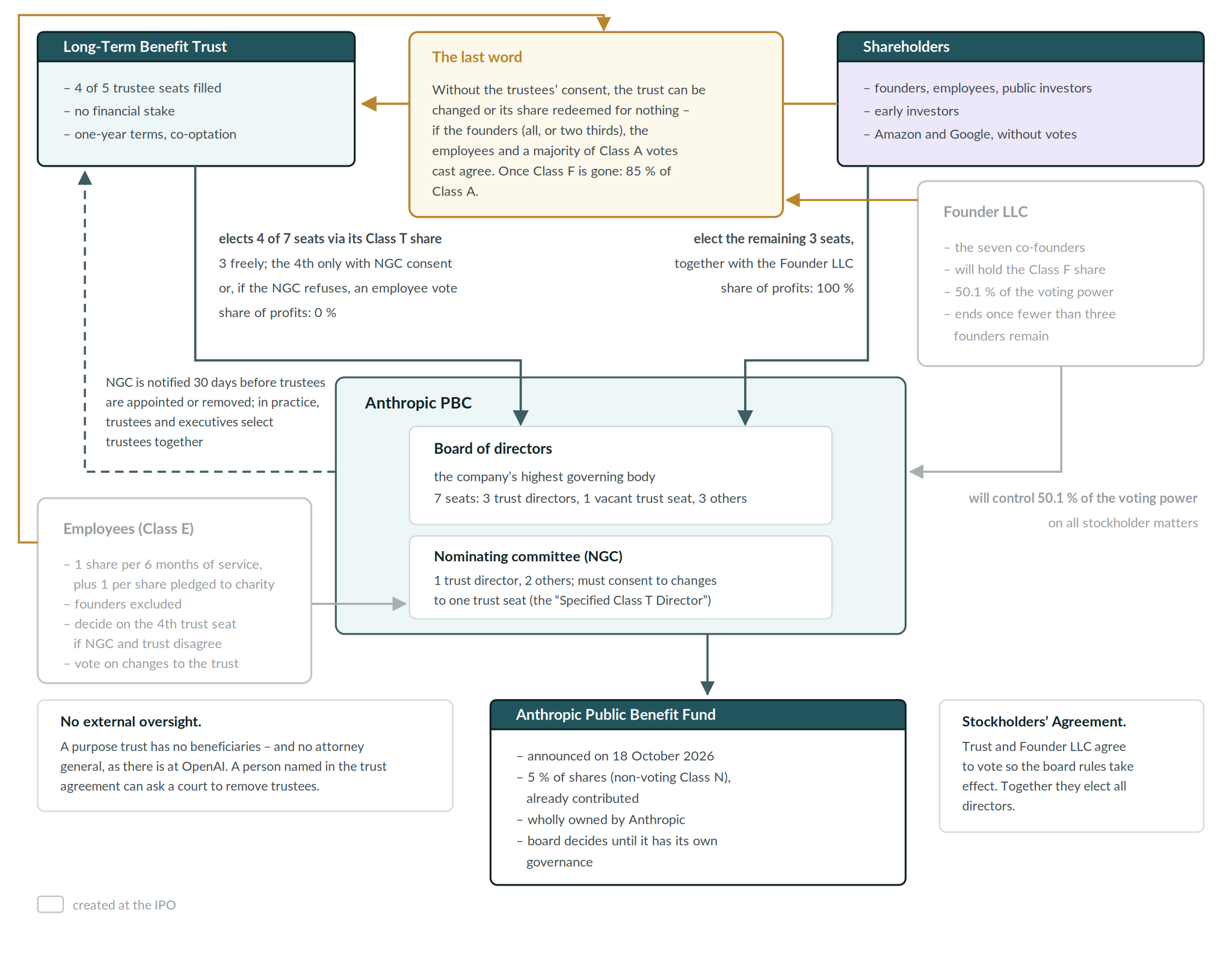
Figure 2: Anthropic’s Ownership Structure, © Purpose Foundation, 2026
So let’s sum this up. Here are the key takeaways from our analysis:
The legal structure of a public benefit corporation alone does not guarantee that mission alignment is always safeguarded and that shareholder interests are truly kept in check. Only shareholders have the right to sue.
The LTBT’s influence is, in part, only formal: Trustees can appoint only 3 of the 7 board directors with complete independence. For the fourth position, the company (the board committee and the employees) has a veto right.
Important information rights of the LTBT regarding AI security and the company’s independence are not set forth in the articles of incorporation but are governed solely by contract, i.e. the Stockholder Agreement. Such contracts may be amended at any time.
Even the LTBT itself is not 100% secure in the long term. Certain majorities among the founders, employees, or other shareholders could completely strip it of its powers. In that case, Anthropic would simply be a regular public company listed on the stock exchange.
Nor is control by the Founders LLC guaranteed in the long term; it merely provides the founder dominance over the wider investor base that is common in the tech industry.
There is no real separation of economic and voting rights: those who ultimately control the company – currently, above all, the founders, later potentially the broad base of shareholders, since they can strip the LTBT of its powers – can benefit personally and substantially from a rising company value and dividends.
And to break it down on the level of the two steward ownership principles:
Independence seems to be in place to a certain degree: founders who are actively involved in the company’s operations hold the majority of voting rights (50.1%), and a trust with independent trustees has a hand on the steering wheel of the company. But it’s only one hand, and also this hand can be removed if the other hand is strong enough to push it aside, so to say. So ultimate power lies with the shareholders. Independence is thus not guaranteed in the long run, as would be the case in a steward ownership structure.
Purpose orientation, realized through a capital lock: Here, too, we are in a gray area, with a clear tendency to a negative answer. On the one hand, there is a large non voting stock (11), while operational control, also over dividends, lies within the company, and the company is (partially) governed by a (more or less) independent trust. But after all, as there’s no thorough and legally binding separation between control and personal access to the company’s value, it must be said that a capital lock is not in place. The majority of stockholders hold both economic rights and potentially, the right of ultimate control. An important detail here: Should holders of non-voting Class N stock (a case in point are Google and Amazon, both holders of a substantial amount of N shares), ever sell these non-voting shares, these would automatically convert into ordinary Class A stock, equipped with voting rights.
The bottom line: All governance structures designed to safeguard the company’s mission-oriented focus and independence – whether through a trust or control by the founders – are potentially temporary and lack long-term, and in some cases any, legal bindingness. The two share classes designed for this purpose – Class T and Class F – are explicitly referred to in the prospectus as having a “sunset time.” The aim is to remain as flexible as possible on the stock market: “to preserve long-term flexibility if circumstances change” (p. 108). And once it’s set in motion, there’s no turning back: “The Class T Sunset Time, once triggered, is not subject to extension, delay or waiver” (prospectus, p. 252).
The prospectus projects a future vision of Anthropic as a kind of ‘perfectly ordinary’ listed PBC, devoid of any control or safeguard mechanisms whatsoever to ensure its independence and fulfilment of its mission.
(11) A case in point are Google and Amazon, both holders of a substantial amount of non-voting Class N stock. But should they ever sell their shares, however, these would automatically convert into ordinary Class A stock, equipped with voting rights.
Despite this critical assessment from an SO perspective, we do not want to claim here that tech corporations like Anthropic would best be organised along SO lines. That would be far too easy, and it would certainly raise an endless number of questions that we cannot all address here or answer at all.
But we do want to show a way in which it can work, from a different industry: the example of Novo Nordisk, the biggest foundation-owned company in the world. Through the use of dual-class shares, the company is structured in such a way that it remains independent and purpose-driven in the long term, while its shares are freely tradable on the stock exchange, enabling the company to raise capital.
The Novo Nordisk Foundation holds, via Novo Holdings, all the A shares, which carry ten times the voting rights of B shares and may never be sold. This way, a solid majority of 77% of the voting rights always remains in the foundation's hands for the long run. Investors can buy and sell B shares that equip them with profit and voting rights (see our case study).
The example refutes the widespread prejudice that SO and capital markets are incompatible. On the contrary: shares can even be traded. The decisive point is that the majority of the voting rights (= control over the company) is not available for speculative sale and rests irrevocably with the foundation or stewarding entity, over which, ultimately, the foundation authority keeps watch, a state body. In this way it is guaranteed in legally binding form that the company's course cannot be compromised by outside or personal interests.
Anthropic’s LTBT is not a toothless tiger, but it seems that in case of doubt it does not necessarily bite either. It is a long way to the legal bindingness of an SO structure. SO and its principles cannot be revoked, as they are anchored in a company's DNA: its ownership. That is precisely what Anthropic's mechanisms are not. The LTBT, by contrast, is rather an organ grafted on from outside, one that can also be cut off again from the bloodstream of power. That its decision-making logic does not differ greatly from that of the shareholders is shown by the consensual change to the safety policy in February, which essentially runs counter to the company's own stated mission. (Though this is contested, and the justification is precisely: we have to keep going so that we, as “the good guys”, are not left behind by the others, who do not have the good of humanity as their guiding principle.)
Despite the LTBT, decisions can still be taken that run counter to the company's purpose, which is, to be honest, always a possibility, of course, also in a steward-owned company. Such decisions need not necessarily be monetarily motivated. The urge to be part of the “race to the top” can also rest on other motivations – for example a striving for power and significance. In this context, reference is frequently made to the tech elite’s pursuit of a post-human era, the merging of humans and machines, or goals such as preserving life and halting aging.
Nevertheless, this business makes them billionaires. And nevertheless, it must be assumed that the IPO will increasingly place the company under pressure to deliver returns, as we have described at the beginning.
After all, even the company and its leaders openly communicate their doubts about their own structure, maybe out of honesty, maybe to play down the “risks” that the construction means for investors. Already in 2023, Jack Clark, Anthropic’s co-founder who heads the policy team, said about the back-then-new trust construct: “I am pretty skeptical of things that relate to corporate governance because I think the incentives of corporations are horrendously warped, including ours.”
It’s the same Clark who has just warned that this race knows no brakes (see chapter 1).
The strongest warpedness, if one may add, will certainly come with the literally larger-than-life IPO. Because this IPO, unlike Novo Nordisk’s listing, is going to meet structures that are not 100% safeguarding mission-alignment. They allow distortion.
For the shareholder value logics of the stock markets, such a structure can be fertile ground. The IPO can dilute the existing holdings, bringing in new shareholders. Shareholders – owners, after all – who may read the trust (that is not nothing in terms of mission-safeguarding) as a risk of value impairment. And in the end, the control mechanism, which is not absolutely secure in any case, could also be abolished again by a shareholder majority.
With neither T nor F stock being designed for the long term, Anthropic will one day be just another normal stock-listed company. A PBC, you might say, but well, we’ve already seen how mission-binding that really is.
And buyers of the stock at the IPO and afterwards are speculating on exactly that: an increase in the value of their holdings in this promising company. This means that the IPO creates an ownership base oriented towards shareholder value maximisation, which can of course influence the decision-making level and therefore the mission too.
The more relevant pressure, however, does not run through votes in any case. Publicly listed companies change their behaviour on account of expectations, quarterly figures and share price reactions, long before anyone files a motion to amend the certificate of incorporation or the rights of a trust. Paul Polman, former CEO of Unilever, puts it like this in an upcoming interview we recently conducted:
– Paul Polman, former CEO of Unilever
And “Incorruptible”-author Eric Ries calls the force prevailing on public markets “financial gravity” – a force so strong that it is difficult for companies to resist unless they have put in place effective safeguards. A legally binding ownership structure may not be immune to such forces, but it does at least bring a certain resilience with it.
Whilst governance structures are intended to allay fears and scepticism about AI, the warnings of uncontrollable consequences also serve a communicative purpose: the more powerful and promising the new technology appears, the more likely it is that investors will be persuaded to fund the race to the top. Yet many doubt that the gamble will pay off in the end.
Only a few days ago, Torsten Slok – chief economist at Apollo Global Management, itself one of the major private capital providers behind the AI buildout’s financing (12) – pointed out that AI has so far had no positive effect on the productivity of companies outside the tech sector:
– Torsten Slok, chief economist at Apollo Global Management, October 24, 2026
Scepticism is evidently growing. Investors have reportedly advised Anthropic to aim for a smaller valuation than the $2 trillion figure currently being discussed (13). The question keeps coming up of whether the gigantic valuations of AI companies are “realistic”. There is regular talk of a bubble (14), for which there are various signs.
Much of the scepticism roots in circular financing relationships. Nvidia – the chip supplier whose revenue depends on the very companies it also supports financially (15) – has extended billions in guarantees for OpenAI’s data-centres and a $500 billion-plus financing push with Wall Street firms such as Apollo and BlackRock (Blackstone press release, August 2026).
An entire speculative market has sprung up around insuring against AI-sector defaults – the infamous instrument that made headlines in the 2008 financial crisis. Trading in AI-related credit default swaps (CDS) has risen by roughly 400% within a year. Even Nvidia’s CDS spread hit a record high in July 2026, so even the company underwriting everyone else’s risk is not immune to the market’s growing unease.
Particularly under strain is the so-called “neocloud” sector – providers like CoreWeave that sell computing capacity to AI labs. The sector is heavily indebted. Nscale, a UK neocloud provider tied to both Microsoft and Anthropic, posted a £755 million loss on just £104 million of revenue in H1 2026 – even as it filed for a US IPO (resultsense.com). Days later, Microsoft pulled out of its data-centre deal with Nscale in Essex – because the UK’s power grid cannot supply enough electricity there, and that is not expected to change until the 2030s.
– The Economist, September 7, 2025
The risk outlined above is all the greater given how highly concentrated this market is. The US stock market has gained roughly $21 trillion since ChatGPT’s launch in November 2022, and just ten companies, including Nvidia, Microsoft, Amazon and Meta, account for 55% of that entire increase (see The Economist, September 7, 2025). Analysts have repeatedly compared this concentration to – or argued it now exceeds – the dot-com bubble’s peak.
(12) Apollo is involved in financing arrangements worth well over $500 billion tied to Nvidia-backed data-centre projects, see here.
(13) See Reuters, October 15, 2026.
(14) See Ezra Klein Show, October 16, 2025.
(15) Side note: they all source their chips from Nvidia. And Nvidia has 90% of them produced in Taiwan, a country that is the subject of a major geopolitical conflict.
Should the bubble burst one day – who will be the ones to pay?
The losses, if they come, are unlikely to land where many assume. Big tech’s own balance sheets – carrying little debt – are relatively unexposed: Morgan Stanley estimates that almost half of the forthcoming $2.9 trillion in data-centre capex will come from major tech firms’ own cash flow, with the rest likely from insurers, pension funds, sovereign-wealth funds and rich families.
The real risk instead falls on pensioners, insurance policyholders and ordinary households, whose exposure to US equities now stands at roughly 30% of net worth – higher than the 26% recorded at the dot-com peak (see The Economist, September 7, 2025).
And if, say, Anthropic’s share price falls, early investors and insiders will still have booked – or already cashed in – enormous gains, while pension funds, which would be forced to invest from day one once Anthropic is included in the Nasdaq-100 (which is very probable, given its expected valuation), foot the bill.
Dario Amodei is probably right. The rapid pace of technological development, coupled with the amplifying effects of an IPO, raises enormous questions. Inequality and market concentration are on the rise. Not to mention the ethical and many other challenges facing humanity in the face of AI. And the logic of unchecked financial markets could multiply AI-driven inequality many times over. A mission dedicated to the benefit of all humanity certainly looks different.
So how can this be tackled? Government regulation can work and is certainly important. But even governments cannot always be relied upon. If the technology falls into the wrong hands … but what are the right hands?
Anthropic now promises to mitigate “collateral damage” like inequality through philanthropic initiatives. Whether that is enough to keep telling the world its mission is to “benefit humanity” is certainly up for debate.
Even steward ownership cannot provide a definitive answer to this question. All it can do is ensure that mission alignment is not undermined by purely financial incentives. But this is, at the very least, a lever that should not be underestimated.
Anthropic’s founders are indeed addressing the issue with special governance structures – which per se is good news. There are reasons to believe they are doing the best they can. But also reasons to believe that a back door will always be left open, in case too many safeguards end up getting in the way of business after all. The LTBT is far more than nothing though, and huge amounts of shares are going to be dedicated to public benefit through the newly established fund, with the founders promising to donate 80% of their own shares on top.
The key takeaway for now is: the honest description is not that Anthropic is going to abandon its mission. But the governance structures clearly allow for this scenario to happen. And with neither T nor F stock designed for the long run, Anthropic’s long term ownership vision is to one day become just another ‘normal’ stock-listed company.